
What's the point?
There’s a thought I keep coming back to lately, and it’s not a comforting one. Anyone can do it.
Not almost anyone. Anyone.
And the question that keeps surfacing is simple, but heavy:
If anyone can do what I do, what’s the point of doing it at all?

We’re living in a moment where capability has been radically flattened. Access is no longer the differentiator. Execution, at least on the surface, isn’t either. You can prompt your way into something polished, optimized, and perfectly acceptable with alarming ease.
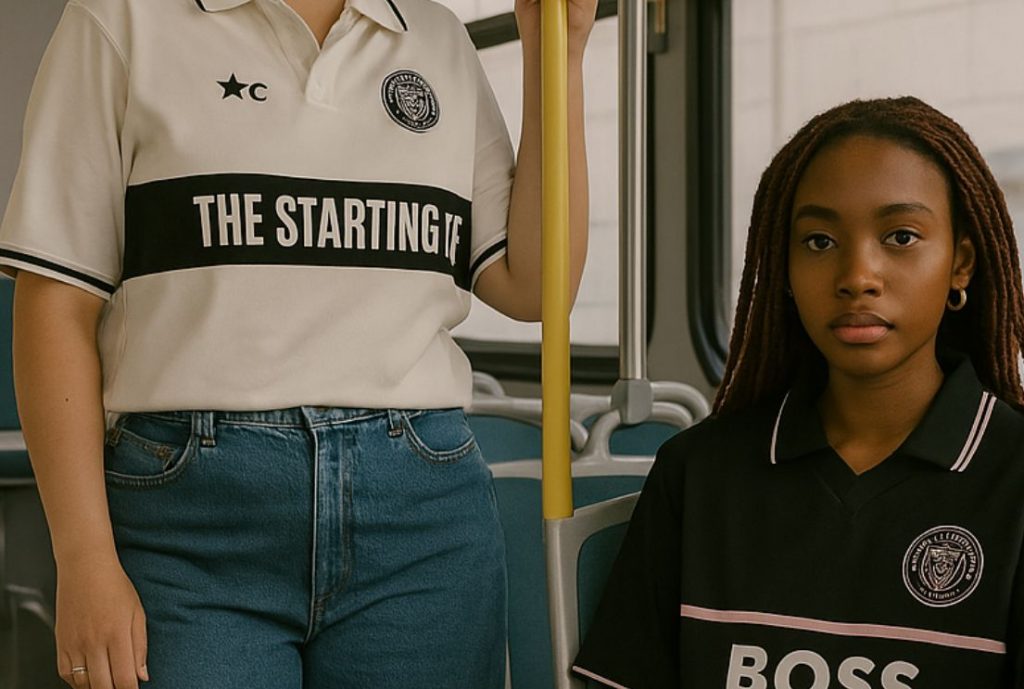
BOSS x Inter Miami
A few weeks ago, I built a fake campaign: Boss x Inter Miami.
Concept. Visual direction. Campaign idea. Assets.All done in a couple of hours. It works. Visually, at least. It looks real enough to live on a feed and pass as a campaign.
But it isn’t good.


Not because the tools failed (they did exactly what they were supposed to do) but because something essential was missing.
There was no risk. No irreverence. No moment where something almost went wrong and became interesting instead. Everything was clean, efficient, carefully curated, and optimized. And because of that, it was completely forgettable. The kind of work that fills space without leaving a trace.
What AI struggles with isn’t technical skill. It’s taste. It’s instinct. It’s knowing when to break the rule instead of following it perfectly. It can replicate patterns beautifully, but it doesn’t know when a mistake is worth keeping, or when something feels too polished, or when being slightly shameless is exactly what a project needs. Those decisions come from being human: from living in the world, paying attention to it, absorbing references that aren’t just visual but emotional and cultural. And those are things you can’t prompt your way into.
Becoming different enough
There’s something unsettling about how quickly “good enough” has become the standard, especially now that “good enough” is available to everyone. With the most basic prompts. With minimal intention. With almost no friction. And that’s where I think the real problem is not that AI exists, but that we’re letting efficiency replace imagination.
The irony is that the more optimized everything becomes, the more boring it gets. When everything is efficient, everything starts to look the same. When everything is correct, nothing is surprising. When everything is generated, nothing feels earned. And maybe that’s the real shift happening right now. The value isn’t in being able to do something anymore. It’s in being able to decide what’s worth doing at all.
In a landscape where almost anything can be generated, the most valuable thing might be the one thing that can’t: a way of seeing that feels different. In a good way. In a weird way. In a confusingly-clear way. A point of view shaped by curiosity, restraint, and the willingness to sit with discomfort a little longer than what’s comfortable.
Maybe that’s the point now. Not to compete on output, but on intention. Not to be faster, but to be sharper. To choose ideas that aren’t obvious, to push past the first version that works, and the second that’s acceptable, until something unexpected appears. That process doesn’t scale particularly well. But it does leave a trace. And in a world that’s increasingly optimized, that might be the only thing worth holding onto.